Lake Mývatn
Lake Mývatn is a shallow volcanic lake in northeast Iceland, about an hour east of Akureyri on the Ring Road, covering 37 square kilometres with an average depth of just 2.5 metres. Its name means Midge Lake, a reference to the vast swarms of non-biting midges that hatch from the lake each summer and form the base of an extraordinarily rich food chain. The lake supports more species of breeding ducks than anywhere else in the world, with 13 species confirmed including the Barrow's goldeneye, tufted duck, harlequin duck, wigeon, and scaup. The surrounding landscape is one of the most geologically varied in Iceland, combining pseudocraters, lava formations, geothermal mud pools, active volcanic craters, and a geothermal bathing facility within a short circuit of the lake. Mývatn is a central stop on the Diamond Circle scenic route and one of the most visited natural areas in North Iceland.

A Volcanic Lake That Supports More Duck Species Than Anywhere Else in the World, Surrounded by Craters, Lava Fields, and Geothermal Springs
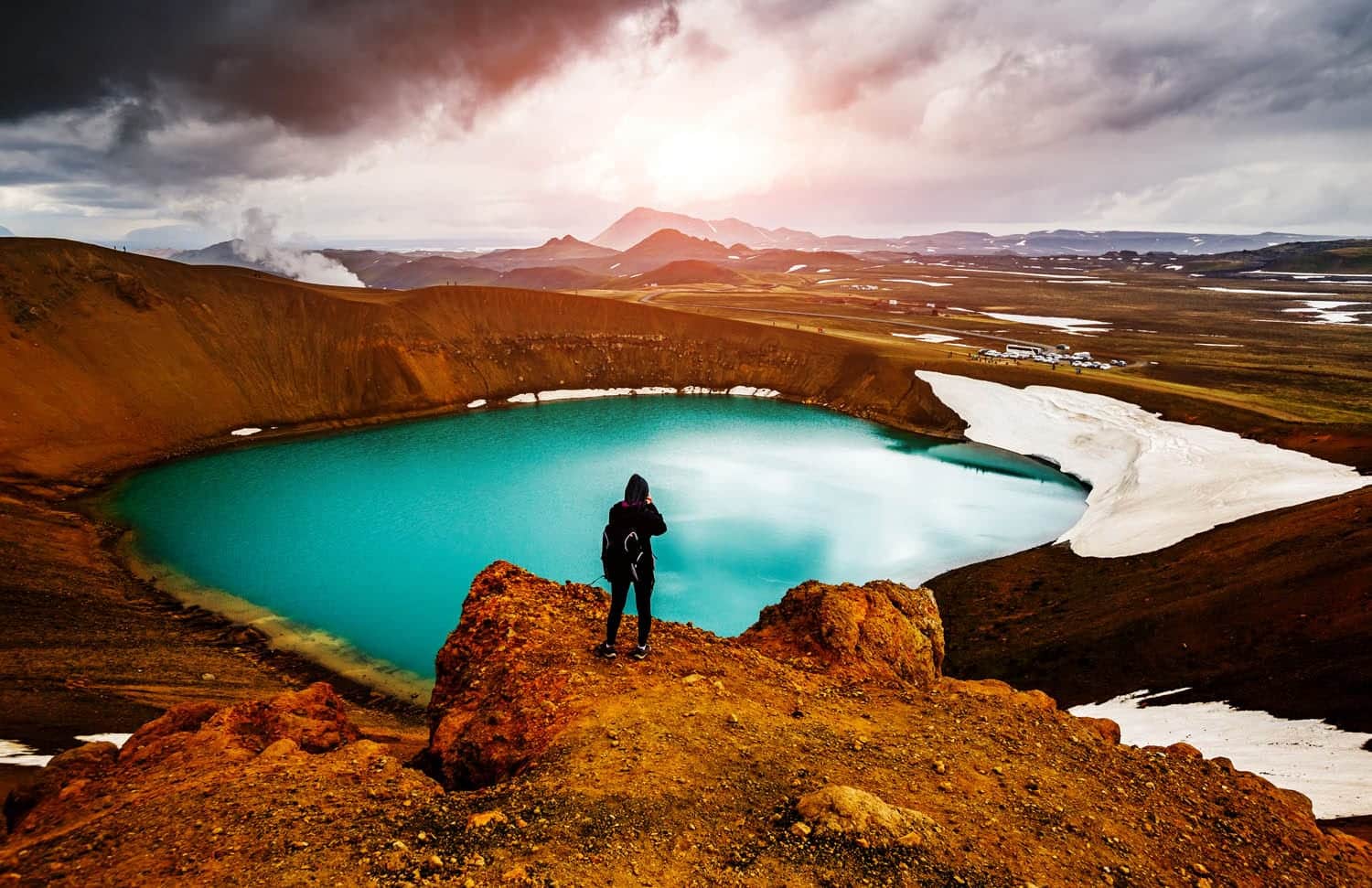
Lake Mývatn formed around 2,300 years ago when a massive fissure eruption sent lava flows down the Laxá river valley, damming the river and creating the shallow lake that exists today. The lake sits within the active Krafla volcanic system on the Mid-Atlantic Ridge, and the landscape around it reflects ongoing geological activity: Hverir, a geothermal field of steaming vents, boiling mud pools, and sulphur deposits, lies a few kilometres northeast; the Krafla caldera and Viti explosion crater are a short drive further; and Dimmuborgir, a field of dramatic lava towers and pillars formed when a lava lake drained around the same time the main lake formed, covers the eastern shore. The Skútustaðagigar pseudocraters on the southern shore formed when lava flows ran over waterlogged ground and steam explosions from below created circular depressions that look like volcanic craters but were never connected to the earth's interior.
The birdlife at Mývatn is the most diverse of any lake in Iceland and exceptional by any international standard. The midges that give the lake its name are the foundation: their larvae live in the shallow, mineral-rich water and hatch in massive quantities in summer, feeding an enormous population of ducks and attracting wading birds and passerines in turn. Thirteen species of duck breed at the lake, more than anywhere else in the world, and include species rare or absent elsewhere in Iceland such as Barrow's goldeneye, harlequin duck, gadwall, and pintail. Whooper swans, red-throated divers, and Arctic terns also breed here. The gyrfalcon, Iceland's national bird, hunts in the area. The best birdwatching period is late May to July. Sigurgeir's Bird Museum in Reykjahlíð documents the species of the area in detail. Note that the midges, while non-biting, are extremely dense in calm weather in June and July, and a head net is strongly recommended.
The main village of Reykjahlíð on the northern shore has accommodation, a supermarket, a petrol station, and restaurants. The Mývatn Nature Baths, a geothermal bathing facility with milky-blue water and views over the lake, are about 3 kilometres east of the village. The cave Grjótagjá, a lava cave with a geothermal spring inside that served as a filming location for Game of Thrones, is nearby; note that the water temperature is currently too high for safe bathing. From Reykjahlíð, a circuit of the lake covers about 35 kilometres and includes most of the main stops. The nearest fuel after Mývatn heading east is 175 kilometres away in Egilsstaðir, so fill up before leaving. Mývatn is approximately 480 kilometres from Reykjavík and one hour east of Akureyri on the Ring Road.